
Three hour meeting bundles start at $700.
Start on a new journey today.
Three hour meeting bundles start at $700.
Start on a new journey today.
Sign up for our Muse-letter now!
By Ivan Barnett, Serious Play
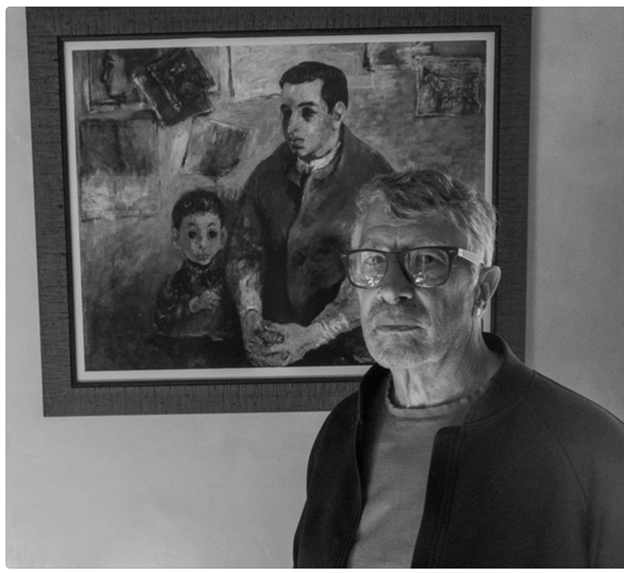
“An artist is not paid for their labor but their vision.” –Whistler, (Image Ivan Barnett and father)
“Just two years ago I was afraid of even approaching AI tools. Now they are like any other.”—Ivan Barnett, 12/2025
There’s a moment in all art making when you must stop polishing and cook the rice and beans—the simple fuel that keeps the work going. Lately, I’ve been saying that AI is rice and beans for a working creative practice. Not a trophy, not a fad. Fuel.
I read a recent post from Seth Godin that lands near the bullseye: the part of any change isn’t the pitch deck or the press release—it’s the uncomfortable edge where you actually do the new thing. I’m not here to quote him; I’m here to validate what we’ve been saying for months: most creatives are still in denial, and denial is expensive. It costs calendar time, opportunities, and—most painfully—momentum.
Let’s clear a few things up:

“Will the real Claire Kahn please show herself?” Image by Ivan Barnett
If you’re avoiding AI because it feels impure, I understand. I’ve spent five decades making, curating, and helping others ship real work. Purity has a place. But purity without practicality turns into paralysis. Meanwhile, deadlines arrive, labels have to be written, price lists updated, grants answered, CVs tailored, collectors followed up. That is rice-and-beans territory—repetitive, necessary, and very much accelerable.
Here’s what I mean by responsible, human-first AI in the arts:

“Creativity takes courage and Claire Kahn was not afraid to use every tool she had.” Image Ivan Barnett -Sea Ranch California.
The risk isn’t that AI will steal your soul. The risk is that the artist down the hall, using AI as rice and beans, will ship and deliver twice as often with clearer words and steadier cash flow because they freed time for, as Seth Godin said, the pointy part: the actual work.
If you’re already feeling defensive, that’s okay. It means the work matters. But ask yourself: Where would smarter rice-and-beans save me two hours this week? That’s the doorway. Walk through it once, and the pointy part, the making, gets more of you and you will receive more of it.
Ready to try the grown-up play? Reply “Rice/Beans” and I’ll send times for a 3-hour bundle. We’ll keep it human, keep it authentic and ethical, and increase your momentum where it belongs.
© 2025

