
Three hour meeting bundles start at $700.
Start on a new journey today.
By Ivan Barnett

Native On Horse, Water Color, Paul Dyck.
Over the past year I have come to understand something more clearly than ever before: the room matters.
We are living through one of the most extraordinary technological moments in human history. Artificial Intelligence is advancing at a breathtaking pace. In many ways it may prove to be the greatest invention since Edison’s electric bulb says Seth Godin. It will change how we work, how we communicate, how we think, and even how we imagine the future.
And yet our primal brains remain wonderfully unchanged.
We still crave looking one another in the eye. We still need the serene currents that pass between two humans in real time. We need to touch and be touched through conversation, laughter, and shared curiosity. That ancient confirmation of aliveness gives us the courage and hope to continue our journeys.
Artists have always lived close to isolation. Whether sitting in a smoky café on the Left Bank in Paris a century ago, or working in the creative outposts of New Mexico during the Oppenheimer years of the 1940s, artists have always sought both solitude and community.
Salon 1033 was born from that understanding. In truth, its roots go back much further in my own life.
During the 1970s, 80s, and 90s I spent considerable time near Rimrock, Arizona, at Beaver Creek on the ranch of picture maker and antiquities collector Paul Dyck. Dyck was a remarkable figure — a painter, historian, and passionate advocate for the art and culture of American Indian tribes. He spent decades studying Native American life and was deeply respected for his paintings and historical knowledge of the American West. For many years, Paul and his wife Star would make the drive from Rimrock to Santa Fe to be a juror for our famed “Indian Market.”
His ranch, which we affectionately called Dyck’s Canyon, was its own kind of cultural crossroads.
If you wanted to visit Paul, you first had to stop in the tiny town of Rimrock and drop a few quarters into the phone booth to call ahead. “Paul, I’m coming down the canyon,” you’d say.
Then you’d drive out to the ranch forging Beaver Creek first and see who had gathered on any given day.
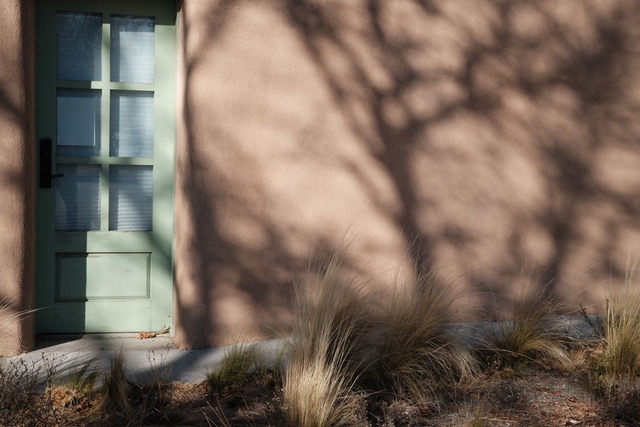
The Door to Salon 1033 is Open to Those Who Dare to Carefully Listen, Ivan Barnett. Image, Ivan Barnett
On many afternoons — especially during the summer — Paul would be in his studio with a pipe in hand, holding court over scotch and soda while artists and friends drifted in and out. My father, illustrator Isa Barnett, was often there. So was Ron McCoy, son of Hollywood film star Tim McCoy. From time-to-time painter Fritz Scholder would appear, along with creatives of the Scottsdale arts community.
There was rarely an agenda. Just lively conversation.
Stories about art being made. Art that might someday be made. Stories about risk, bravery, or some moment in a creative life that felt straight out of a John Ford film. The alcohol flowed freely as did the laughter.
I was usually the quiet one in the room, and at the time the youngest, listening. And those afternoons shaped me. Now all these decades later, I’m the age they were.
The stories, the wit, the camaraderie — they were like a red-hot indelible brand on my imagination. They confirmed that art was not just something made in solitude. It was also something forged in conversation.
On my final visit to Paul’s studio years later, he had just hung up the rotary phone with Kevin Costner, who was calling about dozens of Plains Indian teepees that had been used during the filming of Dances with Wolves. Costner made Paul an offer for the sale of the teepees that he eventually passed on.
That spirit — informal, generous, unpredictable — is the tradition that lives inside Salon 1033 today.
In a world increasingly mediated by screens and algorithms, the salon returns us to something older, purer, and wiser: human presence.
We gather in a small room in Santa Fe. We sit in a circle. Someone offers a spark of an idea. Conversation unfolds. No microphones, no panels, no smart phones, just people craving to be heard and to be listened to.
Even as Artificial Intelligence expands what is possible, our most enduring source of inspiration remains the same as it has always been:
A room.
A handful of curious minds.
And the courage to share a story.

