
Three hour meeting bundles start at $700.
Start on a new journey today.
By Ivan Barnett
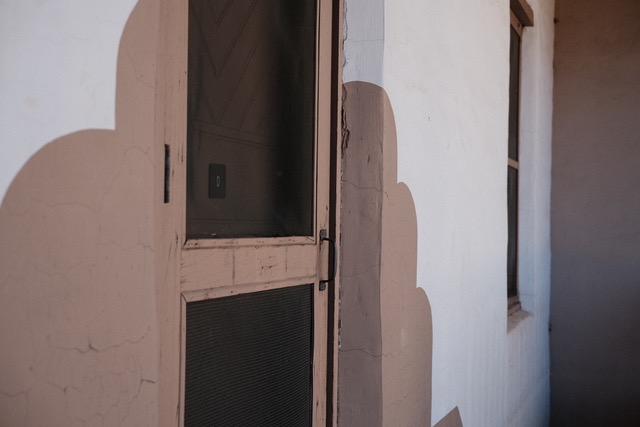
John Gaw team front door, Santa Fe Indian School. Image Ivan Barnett, 2020.
“The Arts don’t exist in isolation.” — David Byrne
What is a creative salon?
At its purest, a salon is a space and moment in time set aside for inspiring conversation. Individuals come not for a lecture or a panel, but to exchange ideas, raw emotions, and leave with more courage than they brought. A great salon feels like purified oxygen: intimate enough to hear one another, generous enough to surprise us, and powerful enough to remember.
A brief history of the setting
Salons have been engines of culture for centuries. In 17th–18th century Paris, conversational circles hosted by remarkable women—Madame Geoffrion, Madame de Staël—helped shape literature, philosophy, and politics. In the early 20th century, Gertrude Stein’s Saturday evenings braided modern art and poetry into something new. Across the Atlantic, Harlem’s living rooms incubated the Renaissance; A’Lelia Walker’s “Dark Tower” connected writers, musicians, and social thinkers who would redefine American culture.
New Mexico has its own lineage. In Taos, Mabel Dodge Luhan turned her home into a crucible where artists and writers wrestled with big ideas under a sky that made everyone look up and not look down. The pattern is consistent: a host with seasoned taste and clarity, a carefully mixed circle, an atmosphere that invites rigor without pretense, and a recurring cadence that transforms an afternoon or an evening into a movement where there is no turning back. The result is a kind of disciplined intimacy. Twyla Tharp referred to it as “a habit.”
Where salons continue to live
Today, salons are everywhere and nowhere. You’ll find them in lofts, studios, cafes, hotels, and back rooms in New York, Chicago, and Los Angeles; around kitchen tables and portals in Santa Fe, Marfa, and Ojai; and in hybrid/online formats where the conversation stays small even when the time zones don’t. Some orbits are discipline-specific (poetry, performance, art jewelry, public art), others intentionally mixed, artists beside technologists, curators beside choreographers, gallerists beside composers, because interesting edges tend to appear where practices and disciplines merge, overlap, and even collide.
The best contemporary salons have learned a few lessons: keep the room human-scale; set a single live question; favor listening over speeches; and do the quiet admin that turns a night of sparkle into a year of momentum (introductions, follow-ups, and a clear next step).
“Say what you will before it’s too late.”—Justin Hynes.
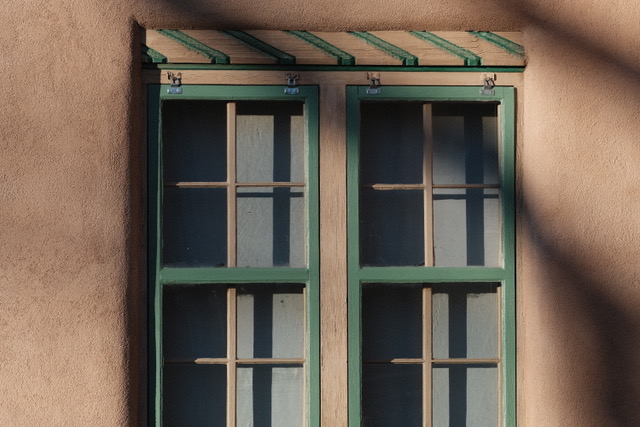
Bauman house off the old Santa Fe Trail on Las Animas Lane. Image Ivan Barnett, 2021.
Salon 1033: a Santa Fe continuation
I grew up in a Pennsylvania farmhouse, just west of Philadelphia, where my parents Isa and Annette hosted the kind of mid-century gatherings that compelled a boy like me to sit at the top of the stairs and listen. Painters, composers, NJ cowboys, matadors, and “madmen designers,” writers, creatives who argued and debated in between gin and tonics and black coffee. When I finally made my home in New Mexico decades later, the infamous salons of Dennis Hopper’s Taos felt like kin.
In 2025, I brought that spirit forward with Salon 1033 in my Santa Fe studio-home, just a few miles west of the city’s main plaza. The intention is simple and explicit: “Salon 1033’s purpose is to embrace creatives in all mediums through spontaneous and authentically curated gatherings.” We began with two evenings that tested the room and proved the hunch: in an age that forces us to perform, we still need a place to be real. No cell phones, rather good old fashioned “eye to eye” contact, just as Joan Didion or Gertrude Stein did.
Each salon often opens with a single thought or question. Guests offer short “sparks” (three to five minutes) that name a pivotal moment, a live problem, or a recent discovery. Then the circle breathes: follow-ups, personal human stories from the room’s circle—some inspiring and most never heard before.
The response has been generous, deeply honest, and human. A note from Santa Fe writer Holly Weber caught what I hope guests feel when they cross the threshold: “My intention was to make myself small and invisible, to lurk and learn. But as soon as I walked in and was greeted so warmly by Ivan, who pointed out folks and their practices and made introductions, I felt myself begin to relax.” My guests have included painter Michael Bergt, composer Les Dala, sculptor Will Clift, painter, Willy Bo Richardson, curator David Rettig, writer James Keller, and Kevin Box, sculptor, among others.
What happens later
A salon’s value is most often measured in what follows: a sentence that finally says what your work is trying to do or says; an introduction that becomes a lifetime collaborator; a gallerist who re-stages a gallery wall so collectors have more physical space. The afternoon becomes an accelerant and the accelerant is a spark that ignites a new body of work.
In our circle, artists have reorganized sketches that are the beginnings into entirely new series, curators have reframed wall panels, and gallerists have adjusted cadence—fewer exhibitions, stronger shows—that lead to commerce. None of this requires permission; all of it benefits and enhances those who showed no fear in attending.
Why Santa Fe, why now
Santa Fe, the oldest capital city in the country, is built for salons. The scale of the city, the density of makers, the habit of hospitality, the way light leans off adobe. Everything conspires to slow the conversation to a human tempo. December farolitos and brief summer rainstorms teach the same lesson: there’s room here to think, feel, and reset, and if necessary, resist. In a time when distribution has accelerated and attention spans have shortened, we’re choosing the opposite: linger, listen, observe, and learn.
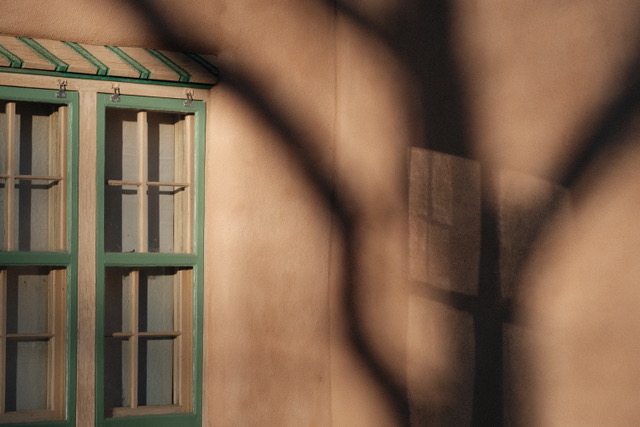
Gustave Baumann, Santa Fe home and studio on Las Animas Lane. Image by Ivan Barnett, 2021.
The next conversation; the next circle
Salon 1033 No. 3 happened February 8, 2026 with a theme that keeps returning to me in the studio and in advisory: The Art of Collaboration. How do artists, gallerists, musicians, writers, and civic partners make work together without losing the soul of the piece or each other? We traded war stories and named practical tools for clarity, credit, cadence, compensation, and communication.
If you’re wondering whether a salon is for you, consider the test I use: Are you carrying a live question you’re not answering alone? If so, bring it. The room is small on purpose, not to exclude, but to protect what the conversation needs: time, respect, and a welcoming door.
Why this matters to me
I have spent five decades making art and two and a half decades directing and operating a gallery. The most valuable thing I can offer now is a room where story, discipline, and play meet, and where isolation gives way to companionship with teeth. Salon 1033 is my way of curating that room in Santa Fe. If you can join us in person, do reach out to me and fill me in on why you’d like to join us. Seating is limited, so if you have an idea, bring it forward. Culture is mere conversation with a memory.
“We don’t learn from experience; we learn from reflecting on experience.” — John Dewey
© 2026

